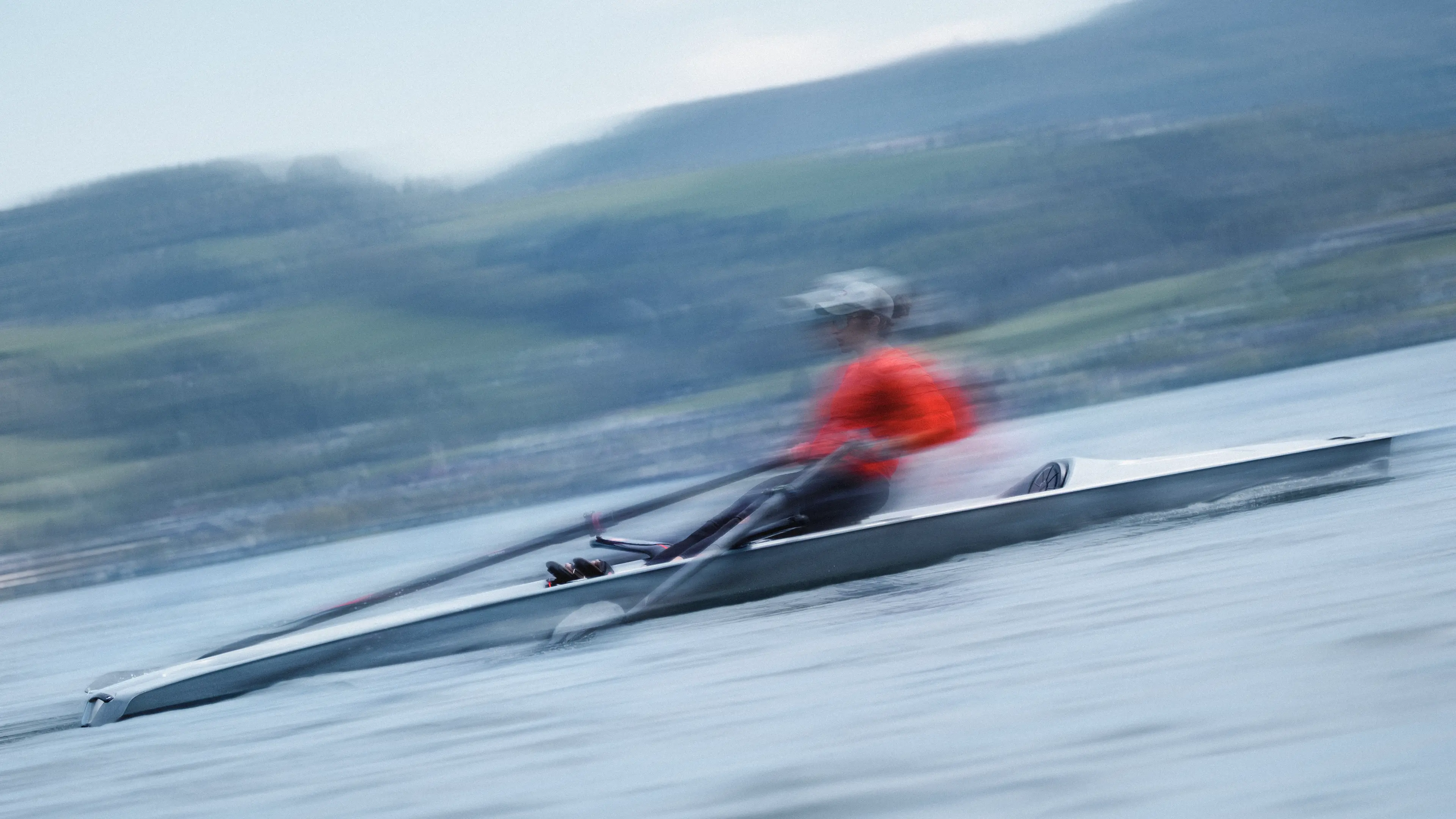
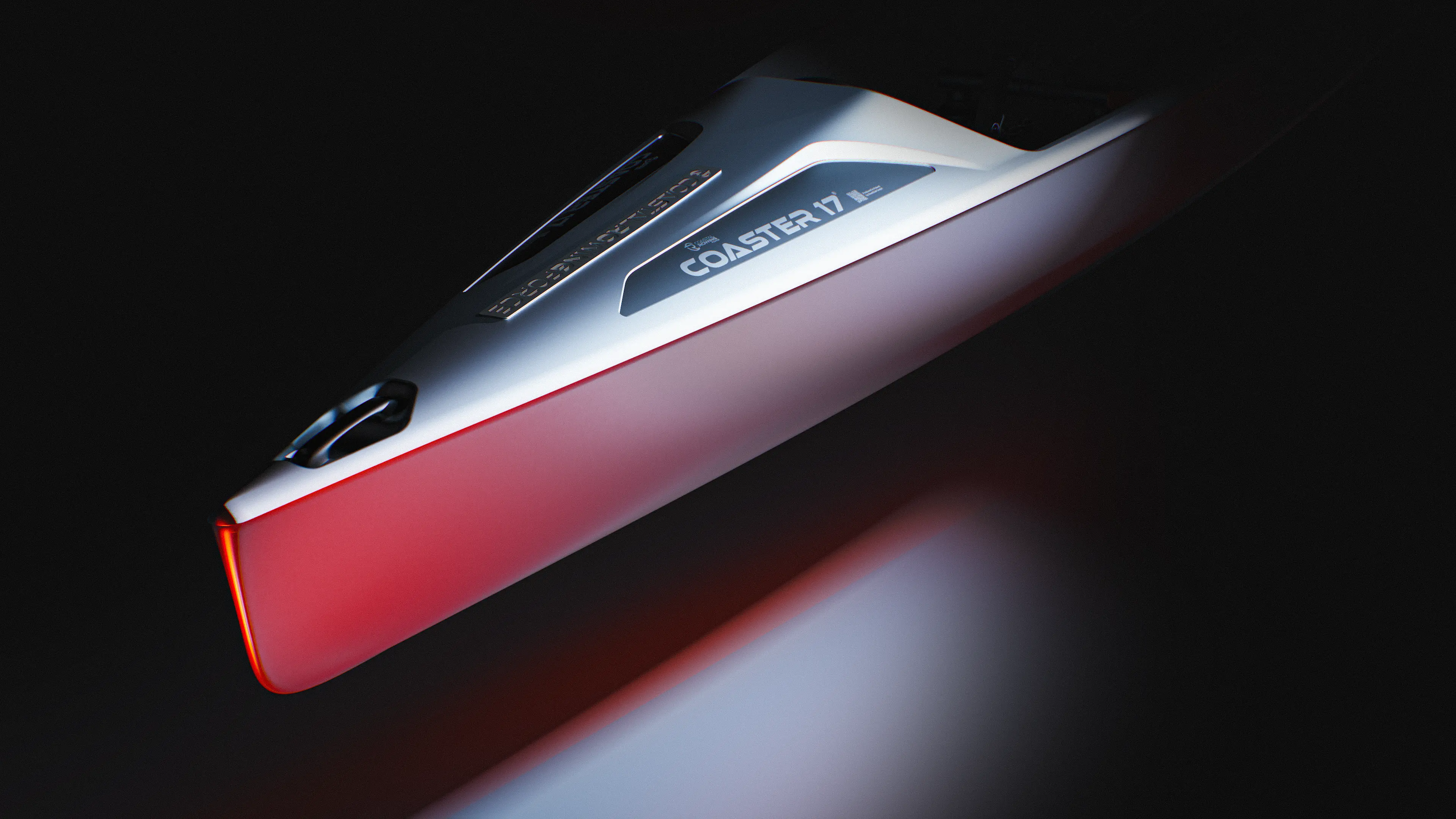
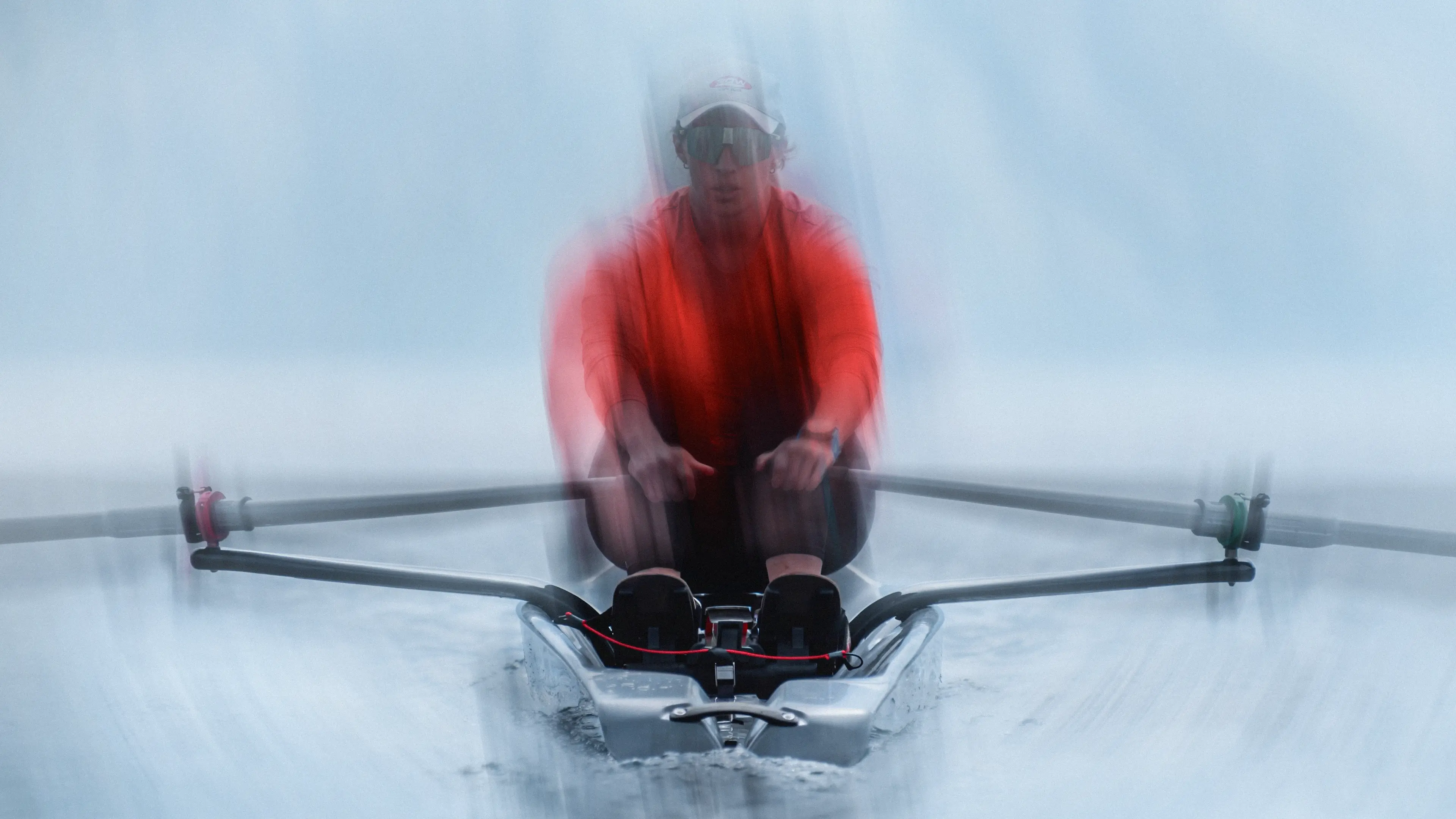
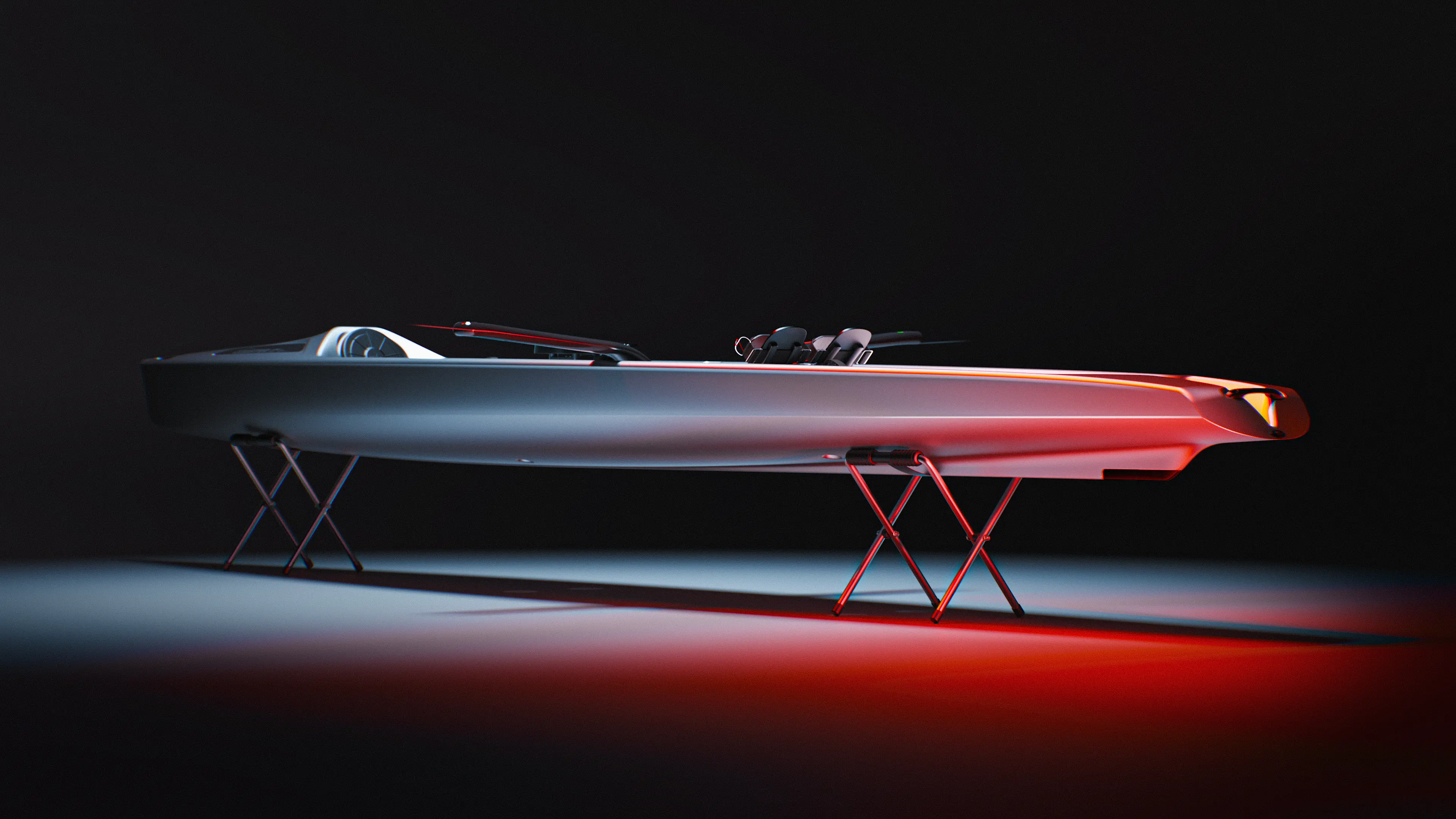
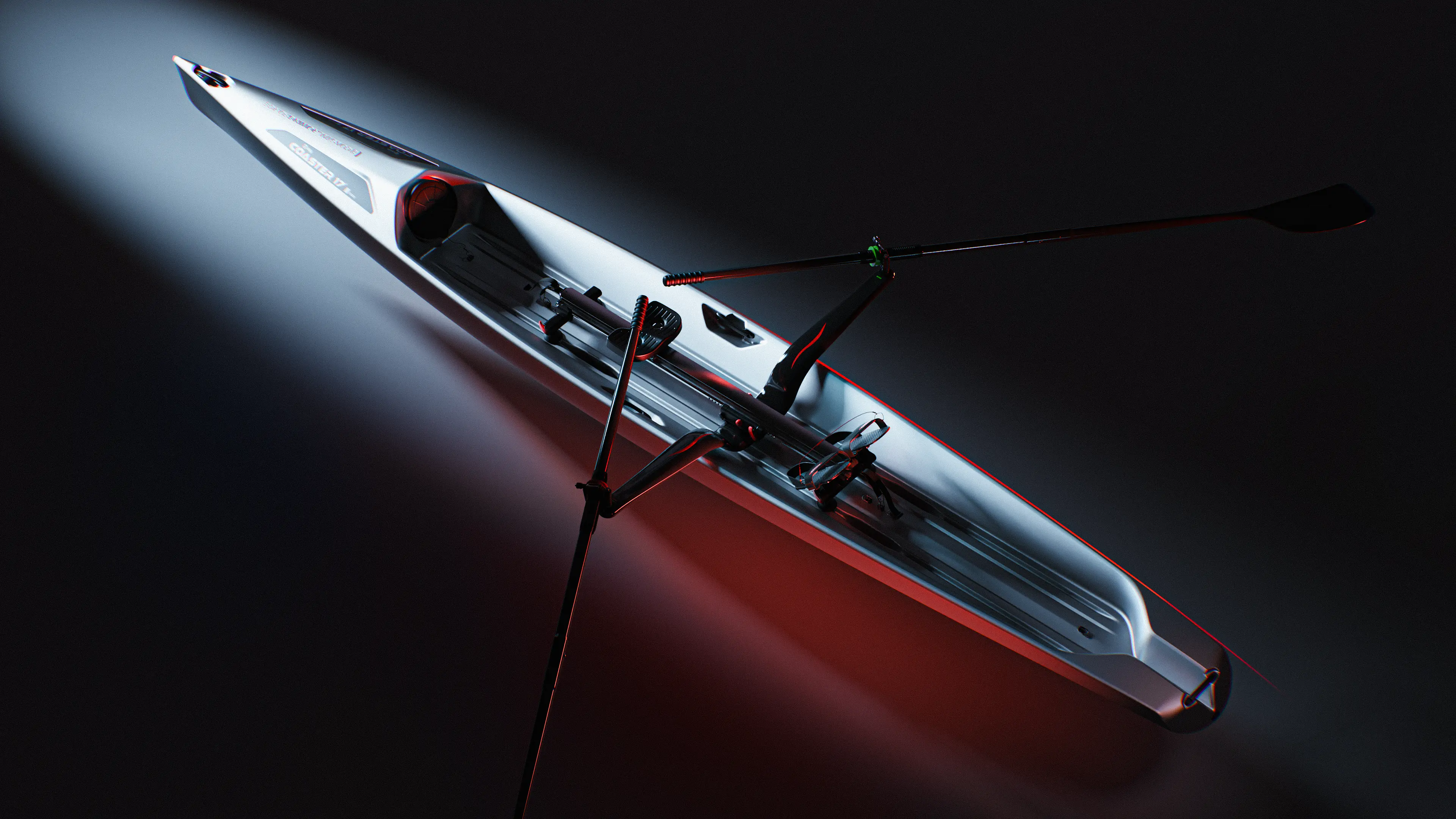
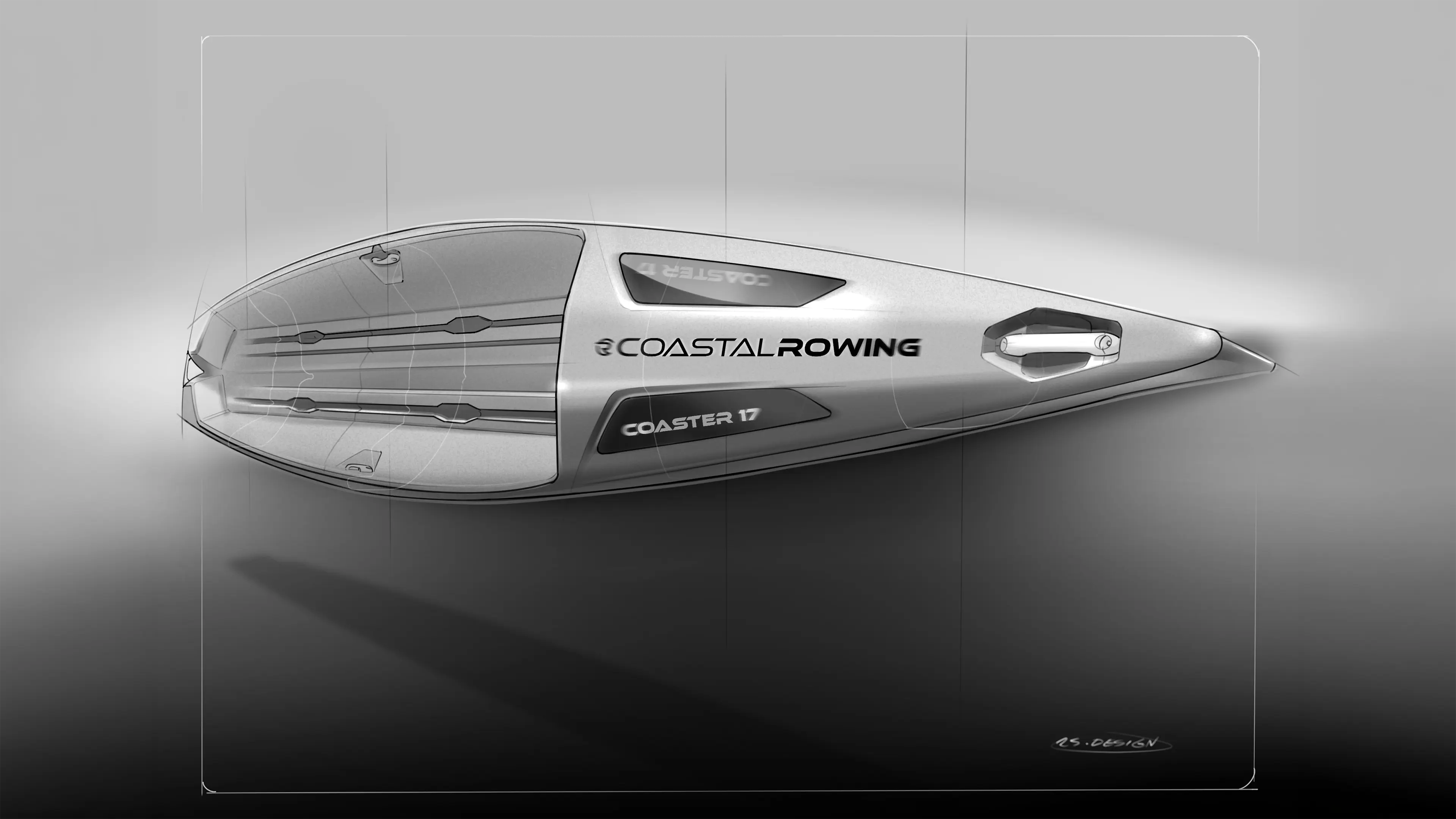
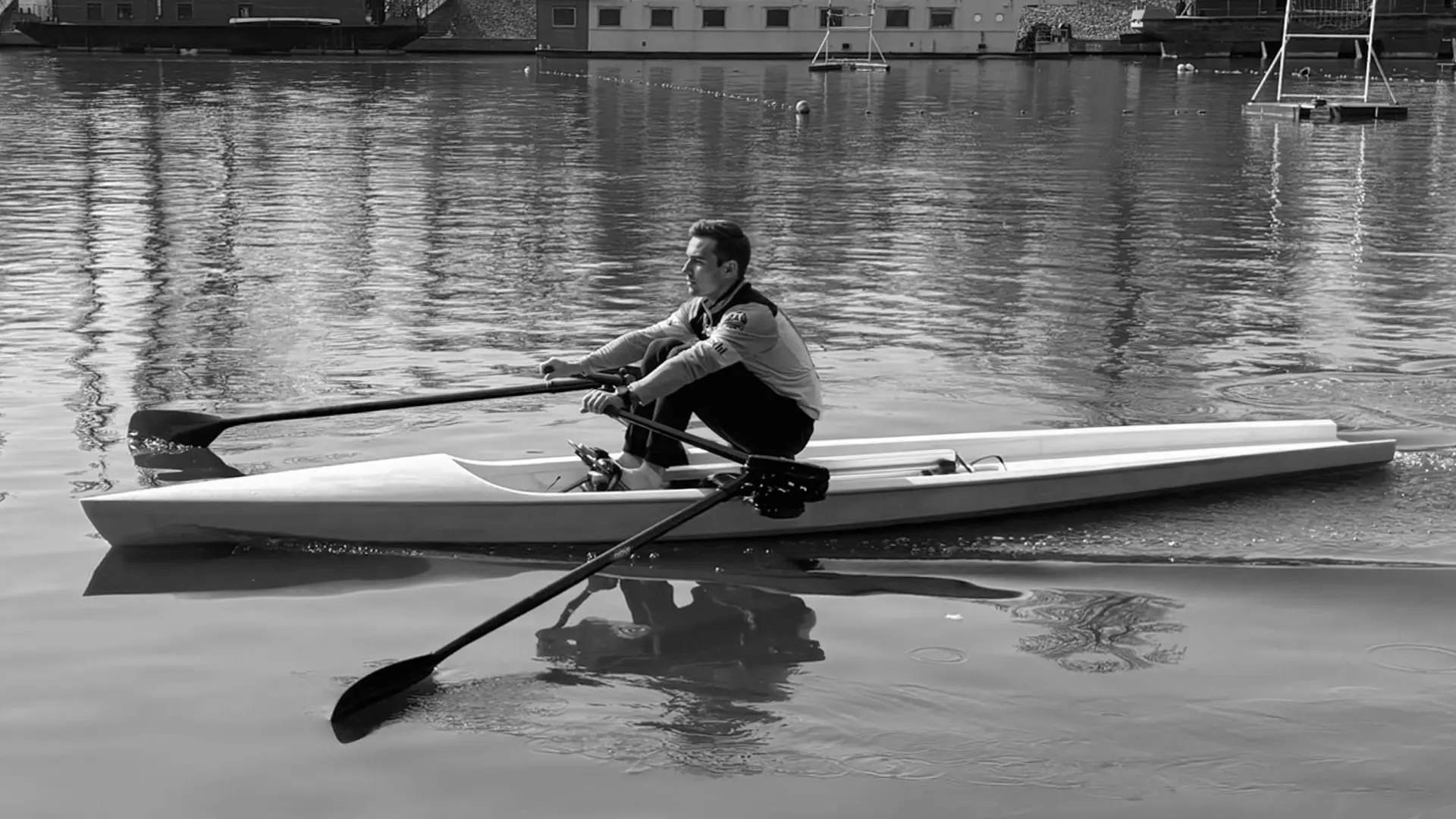
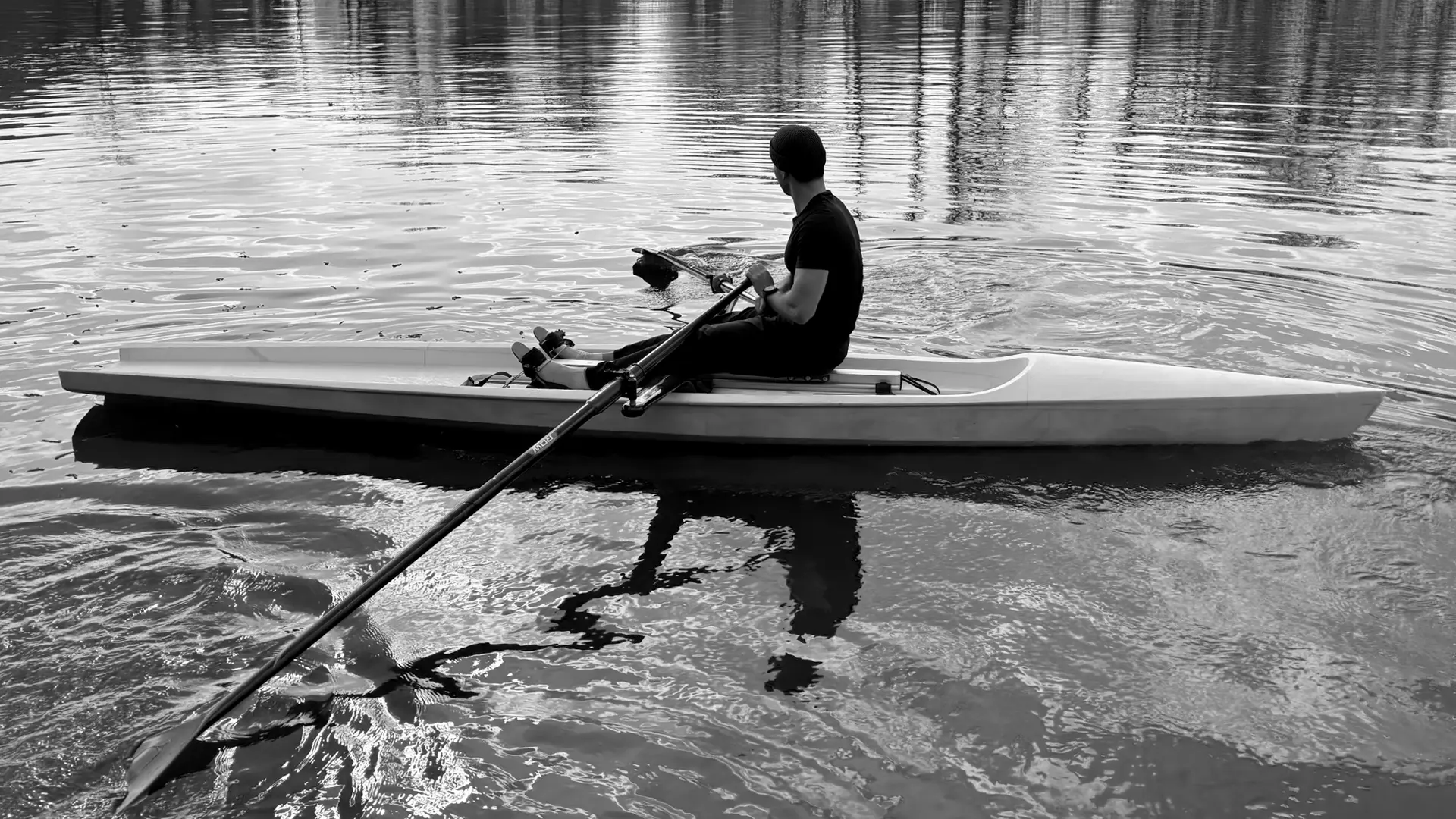
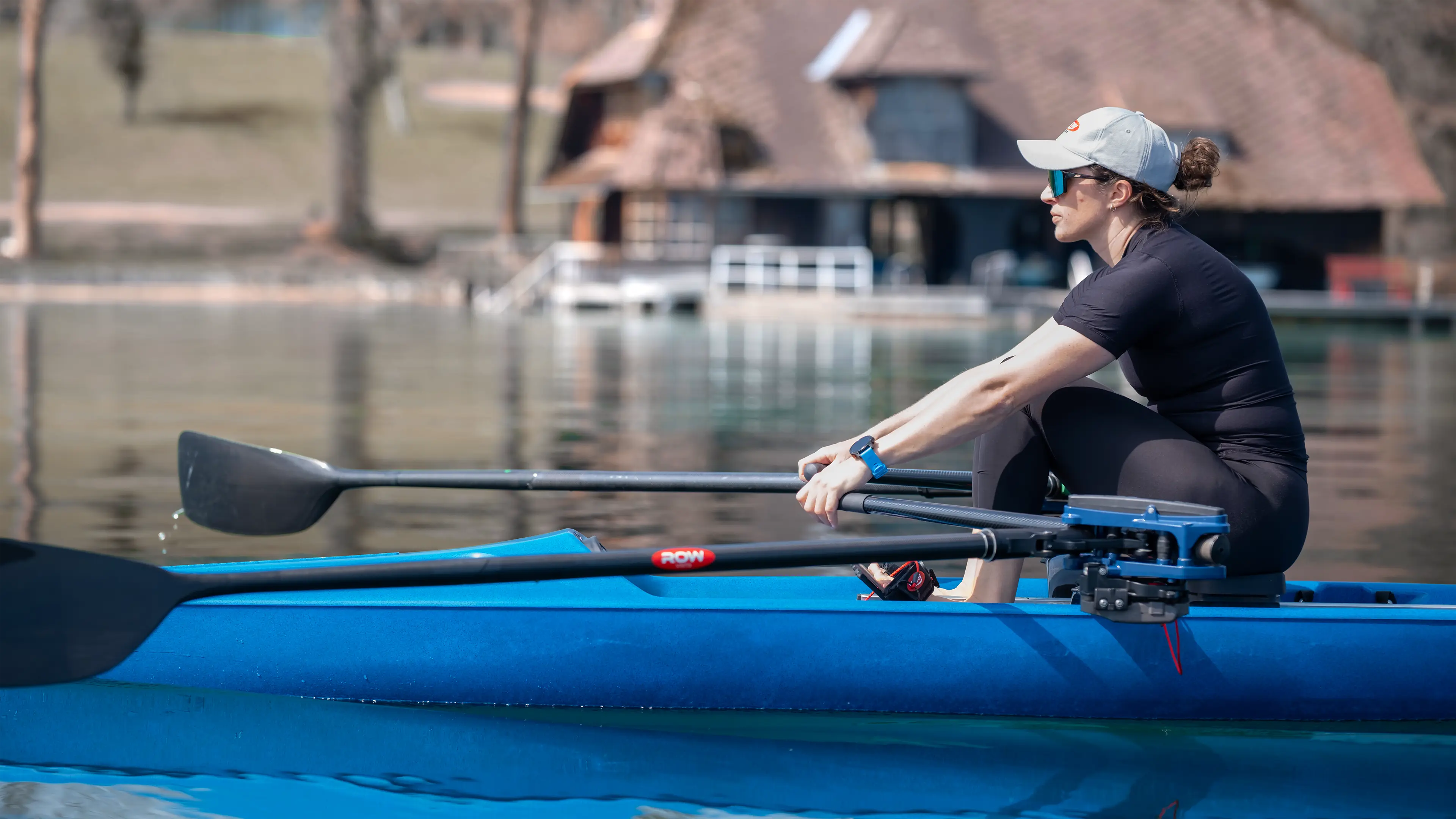
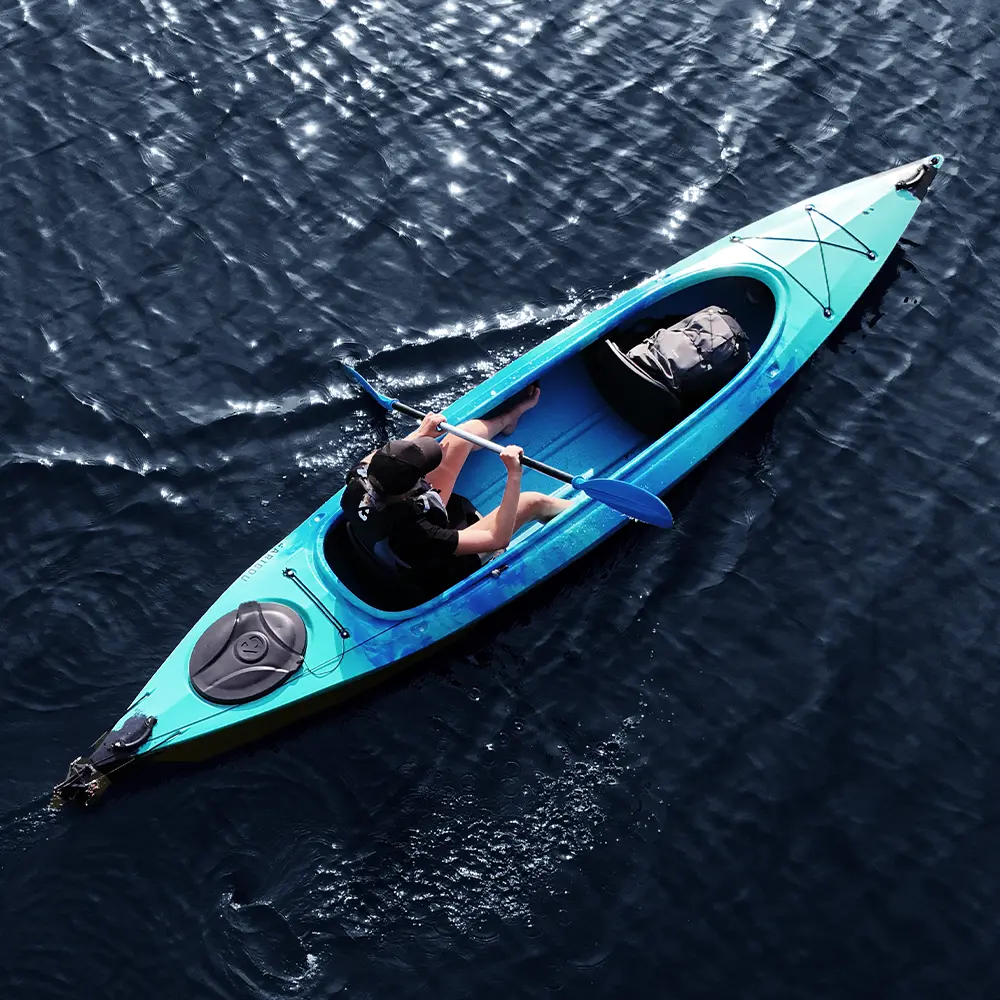
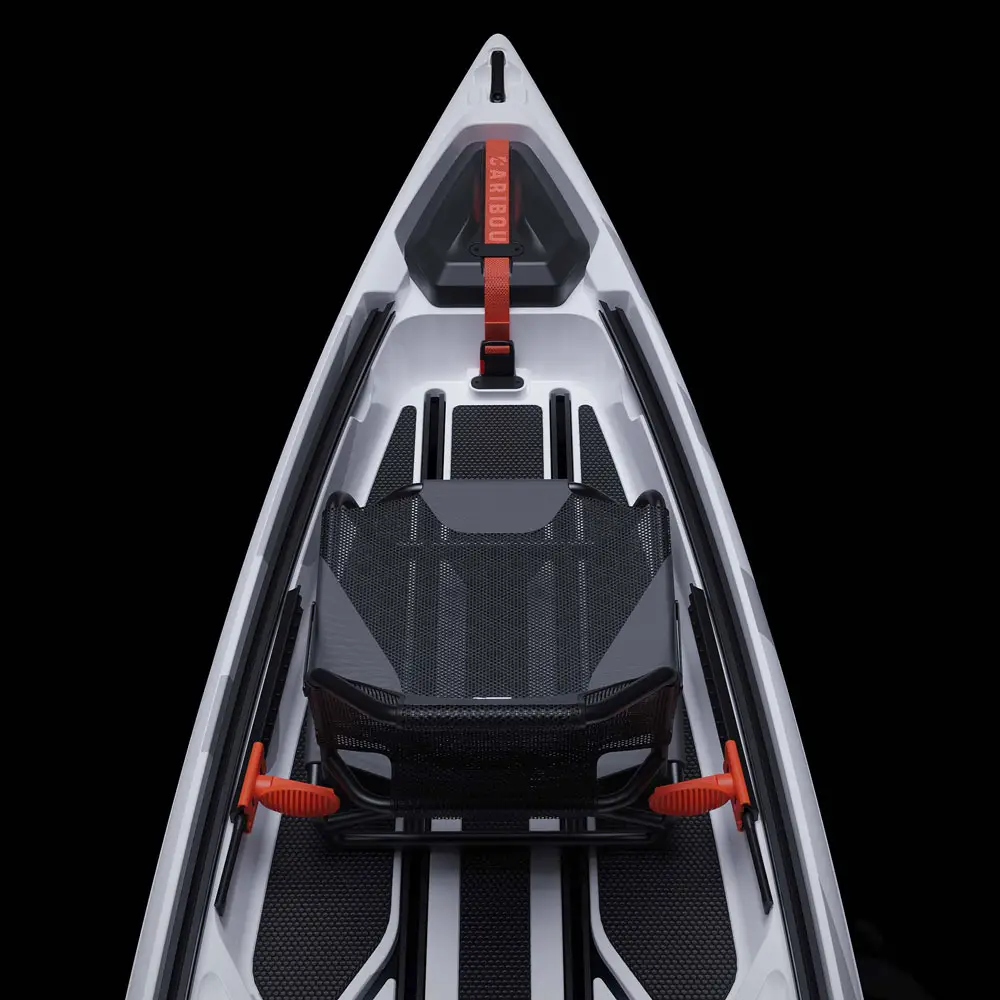
COASTER 17® is a five-meter sit-on-top coastal rowing boat designed for those who would rather hit the water right away than spend time inflating gear on the shore. Its rigid HDPE hull is built for rough conditions - rocks, pebble beaches, and open waves. At 2s.design, we led this project from the first sketches all the way to production mold documentation. Right from the start, our search for proportions was guided by 1970s aesthetics and Syd Mead’s futuristic speeders - forms that look like a primed projectile even when standing still.
For us, industrial design does not end with function alone. In a world where algorithms hand us ready-made choices and details are often overlooked, we deliberately build a broader narrative around our projects. We believe that what truly sets one product apart from another is the story behind it. Without it, you are only looking at the smooth surface of an object, without knowing where its form comes from or why it was shaped that specific way. As humans, we don’t just want to calculate specs – we want to feel. That is why, when designing equipment meant to accompany someone in physical effort, we care just as much about the experience it delivers.
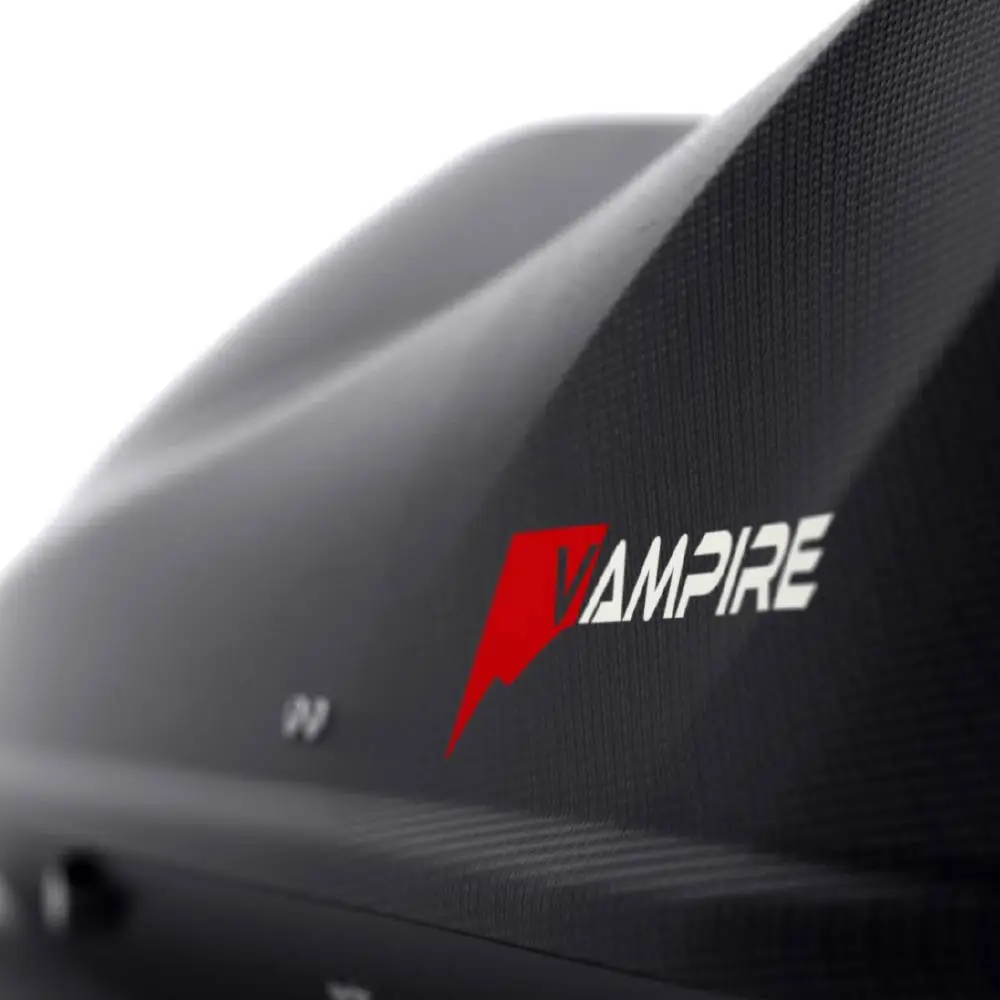
Since the spirit of Syd Mead’s work and the golden age of concept art stayed with us while sculpting the hull itself, the way we presented COASTER 17® in our portfolio was a natural next step – a nod to those forms and to a craft where airbrushed and pencil-drawn vehicles carried a tangible trace of the human hand, speed, and energy. We brought that same analog light onto the boat’s rigid shell, and in the color palette we added one more cue from the same decade: the Jaws movie poster. Instead of pure white, we went with a muted blue emerging from the dark – much like the tones used to paint the shark’s underwater silhouette – and paired it with a bold red. As a result, the sporty character of COASTER 17® can be felt in the light gliding across its hull, even before it touches the water.
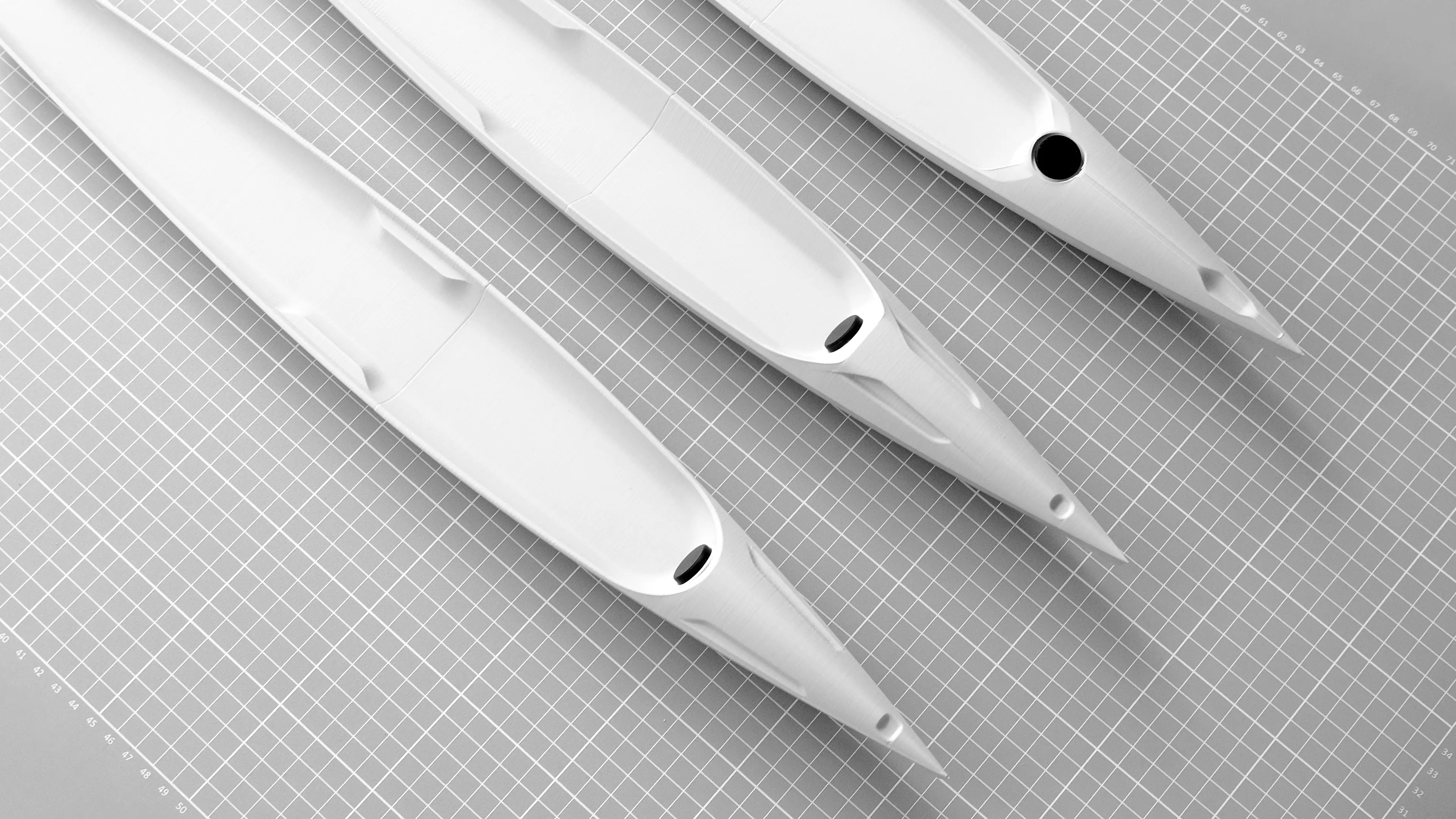
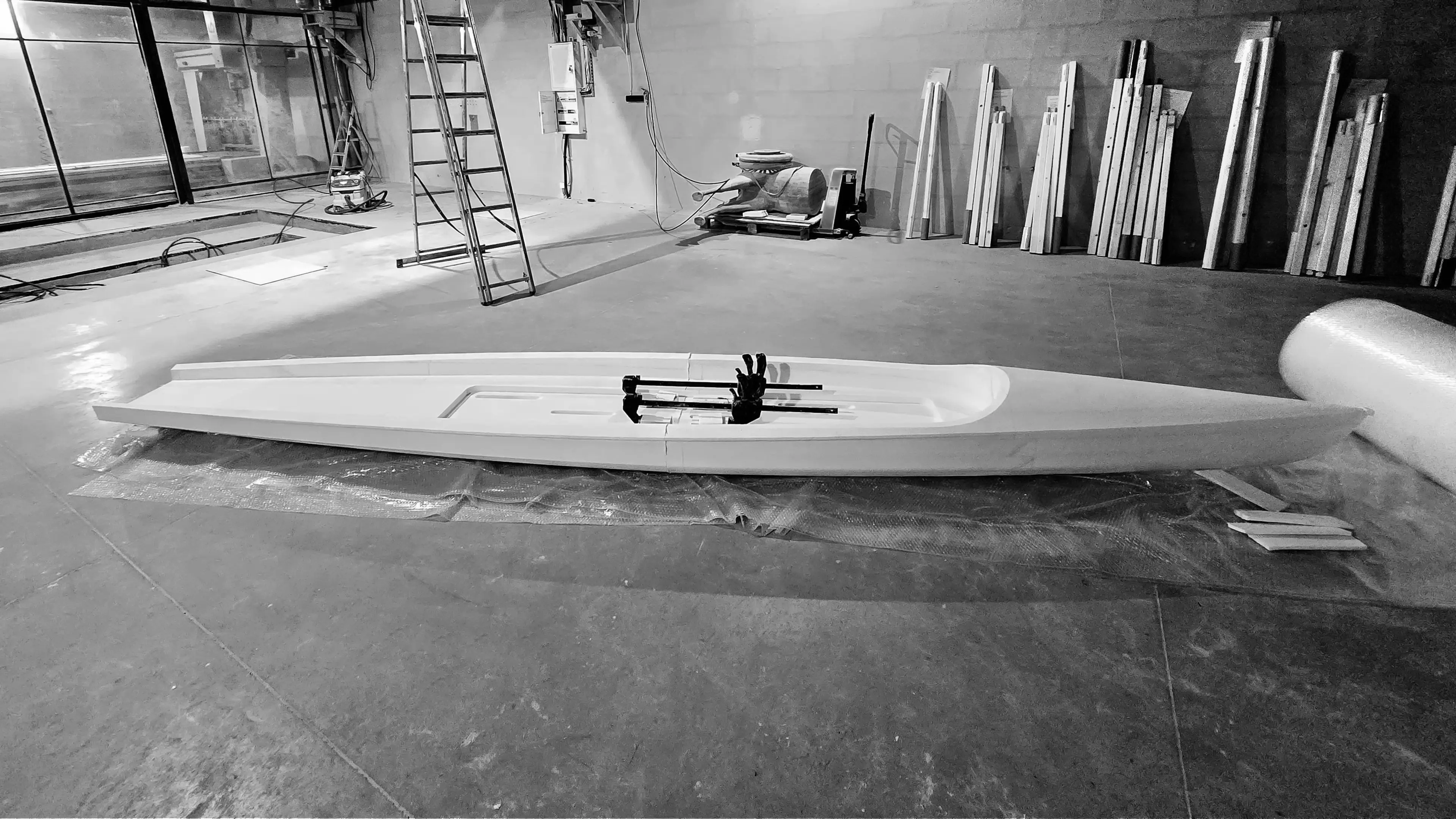
Behind that atmosphere, however, stands a concrete design process. We developed the boat’s final lines across three design concepts, first testing them on 1:8 scale models. Only by looking at the physical form in natural light could we properly judge how the surfaces worked and select the final silhouette. We then milled the chosen geometry at a 1:1 scale and took it out on the water to test its hydrodynamics, tracking, and the behavior of the flat, self-bailing deck. The key here was aligning the boat’s architecture with the RowVista® and RowMotion® rowing systems – ensuring quick frame mounting, dry feet for the rower, and a smooth transfer of oar power into glide. Once testing wrapped up, we engineered the body for production and designed the rotomoulding tooling, controlling longitudinal stiffness and material shrinkage across every meter of the five-meter hull.