The safety and comfort of a patient who must trust us.
CBCT SmartBase is a positioner designed specifically for cone beam computed tomography (CBCT) scans in veterinary dentistry. It allows for precise, quick, and safe positioning of patients - from rodents to medium-sized dogs. It was a highly demanding project that, right from the start, required immense responsibility, empathy, and a flexible approach.
The conceptual stage proved crucial in the entire process. We were designing this equipment completely from scratch, and from the very beginning, we had to fit our ideas into strict manufacturing frameworks. The new product had to be tailored to technological capabilities, fit within specific budget brackets, and above all – flawlessly fulfill its purpose.
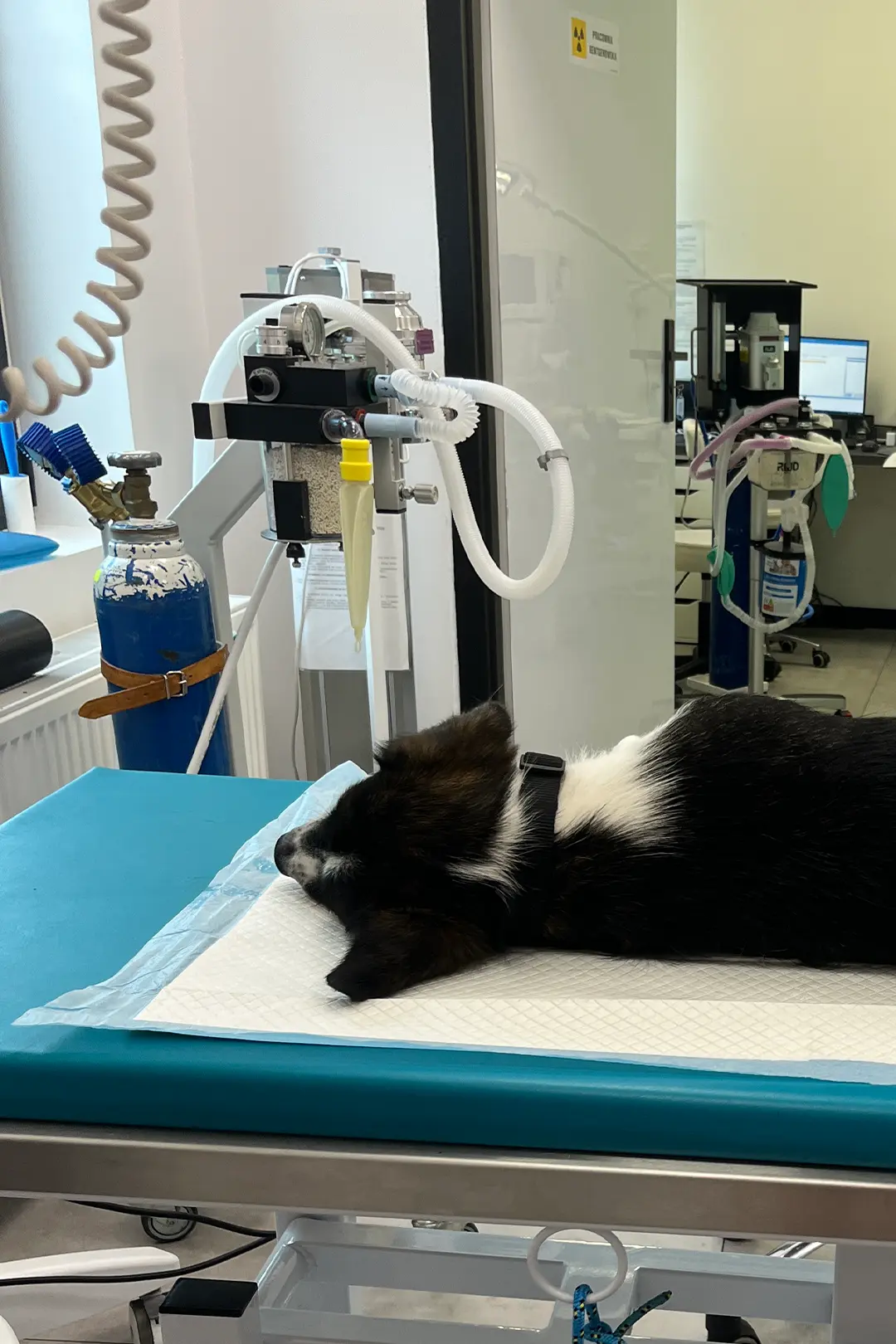
During the scan, the animal is under anesthesia – it is completely limp, making it very prone to injury. Our priority was to provide stable support for the body and relieve pressure on its sensitive points without exerting dangerous compression. This required a thorough analysis of anatomy and translating it into a single structure capable of handling patients of extremely different sizes and proportion
We started with visits to veterinary clinics, field interviews, and observations of the procedures themselves. However, to be able to continuously verify our assumptions, the project’s commissioner – Medif – installed a real CT scanner in our studio. The device lacked an X-ray tube, so it did not emit harmful radiation, but it retained full mechanics and ranges of motion. Thanks to this, we tested every mockup and prototype right away during the machine’s normal cycles, quickly discarding dead ends.
Human work ergonomics were just as important to us as the animal’s protection. During the examination, there is no room for error or adjustments. The doctor cannot lose control over the anesthetized patient even for a moment – any slip from the holder could end in tragedy. Therefore, the adjustment and locking mechanisms had to work reliably and completely predictably. There was one more challenge: usually, a designer can test a product on themselves, but here, empirically stepping into the patient’s role was simply impossible, and the animal itself won’t tell you if something is pinching.
Therefore, veterinarians became our main source of knowledge about patient positioning. They knew best what was missing in their daily practice and what details to pay attention to during the procedure. We created a safe workshop environment where specialists could freely test successive solutions in action and draw conclusions together with us.
The scale of the market gap was enormous. Until now, there was a lack of any systemic solution, which meant that doctors – working on advanced CT scanners – had to manage on their own, propping patients up with ordinary cardboard boxes of various sizes. We managed to replace this makeshift method with a tool that protects the animal and gives the specialist full working comfort. Stable patient positioning eliminated the problem of movement, ensuring the scan image is sharp and accurate the very first time.
In veterinary medicine, the lack of repeats is a key argument – it means not only time savings but, above all, a lower dose of radiation and a shorter time the animal spends under anesthesia. This project clearly shows that even the most advanced medical equipment needs an equally well-thought-out physical tool to fully utilize its potential.